- Monitoring is only useful if indicators, responsibilities and responses are agreed in advance.
- Dust, noise, erosion, water, waste and community grievances need routine checks.
- Records should show what was found and what was done about it.
An environmental and social management plan is a promise. Monitoring is how the project proves it is keeping that promise once construction starts.
Why construction-stage monitoring matters
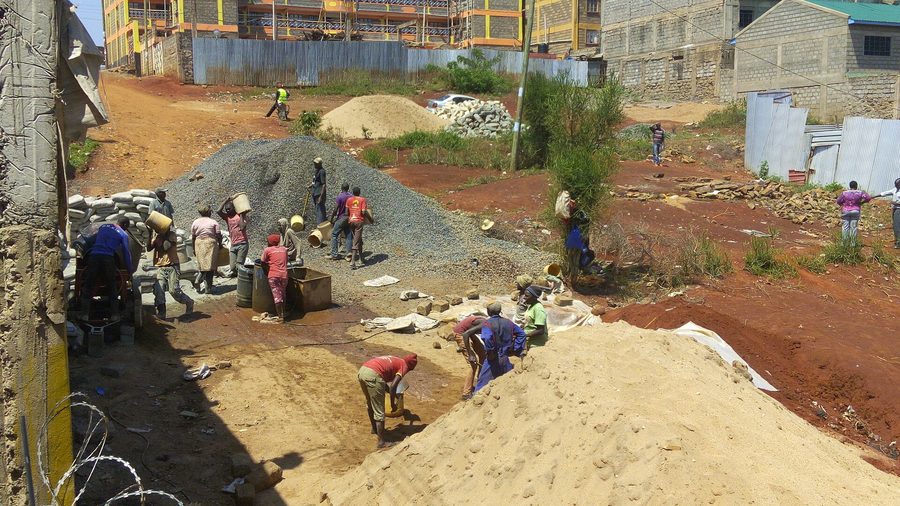
Most environmental and social impacts occur during construction: vegetation clearing, earthworks, dust, noise, traffic, water use, waste, worker behaviour and community disruption. A good ESMP sets out the controls, but controls only work if someone checks them and responds when something is wrong.
Monitoring also protects the client. A documented record of inspections, incidents and corrective actions is useful evidence for regulators, financiers and the community.
What to monitor
| Aspect | Indicator | Frequency | Typical response |
|---|---|---|---|
| Dust | Visible dust, water cart use, complaints | Daily in dry weather | Increase watering, reduce speed, cover loads |
| Noise | Equipment hours, complaints, boundary checks | Weekly and on complaint | Adjust hours, maintain plant, use barriers |
| Erosion | Sediment in drains, exposed slopes, bund condition | Weekly and after rain | Stabilise, repair drains, install silt traps |
| Water | Abstraction, discharge quality, spill risk | Daily and monthly | Stop work, contain spill, notify regulator |
| Waste | Segregation, storage, removal records | Weekly | Correct segregation, remove waste, train staff |
| Community | Grievances, access, safety, local employment | Continuous | Log, investigate, respond and close out |
Plans, roles and responsibilities
The ESMP should name the people responsible for monitoring, the contractor's obligations and the client's oversight role. It should also define the reporting line. A monitoring officer who cannot stop unsafe work or escalate a spill is not effective.
Contractors need the monitoring requirements in their contract, not in a separate document they never read. Induction, toolbox talks and site inspections should reinforce the same requirements.
Reporting and grievances
Monitoring reports should be simple and regular. They should record what was checked, what was found, what was corrected and what remains open. Photographs, test results and grievance logs add credibility.
A grievance mechanism should be accessible to affected people and workers. Complaints should be logged, acknowledged and resolved within agreed times. Trends in grievances often reveal a problem that a site inspection has missed.
Incidents and close-out
Incidents need an immediate response, notification and investigation. The investigation should identify the cause, not just the person involved. Corrective actions should be tracked to completion.
At project close-out, the monitoring record should show whether the commitments were met, what outstanding actions remain and what monitoring continues into operation. That record is part of the project's environmental and social history.
Conclusion
Construction monitoring is a practical management system. It needs clear indicators, named responsibilities, routine inspections and a response process. Amanda Engineering provides environmental and social management support, including ESIA, audits, resettlement planning and construction-stage monitoring.
Monitoring is not the same as auditing
Monitoring is routine and forward-looking. It checks that controls are working and identifies issues before they become incidents. An audit is a periodic, structured review of the management system and compliance. A project needs both.
The monitoring team should have the authority to stop unsafe work, require corrective action and escalate a serious issue. If the only response to a finding is a note in a report, the system is not working.
What good records look like
Records should be dated, signed and linked to a location. A photograph without a date or location is weak evidence. A grievance log should show when the issue was received, who investigated it, what was agreed and when it was closed. A spill record should show the quantity, cause, response and disposal route.
These records protect the project when questions are asked later. They also help the next project avoid the same mistakes.
A practical monitoring cycle
The cycle is simple: inspect, record, respond, verify and close. Each finding should have an owner and a deadline. At the next inspection, the team should check whether the action worked. This discipline turns monitoring from a paperwork exercise into a management tool that protects the project and the community.
Resettlement planning along transmission corridors
Need support on a project like this?
Our team can help with feasibility, design, procurement, construction supervision and project management. Tell us about the site, scope and stage of your project.
Discuss a project